Discover the living books, nature study, and short lessons that make Charlotte Mason one of the most loved homeschool methods, explained simply for new families.
When I started homeschooling in 2014, I had a stack of books, a kitchen table, and a lot of questions. We didn't have a dedicated school room. We still don't. What we had was the Pacific Northwest outside our door and a growing hunch that childhood shouldn't feel like a race.
Charlotte Mason gave that hunch a name and a shape.
Over a decade later, with one child in high school and one in middle school, her method is still the backbone of our home. It has carried us through homeschool seasons in Oregon and Idaho, a move across the country to Florida, and through every stage from picture books to Homer and Shakespeare.
If you're new to Charlotte Mason and feel a little overwhelmed by the terms (living books? narration? masterly inactivity?), this guide is for you. I'll walk you through the core ideas, show you what a day can actually look like, and give you a simple plan to start this week. No teaching degree required, and no need to buy everything at once.
What Is Charlotte Mason?
Charlotte Mason (1842–1923) was a British educator who believed children are born persons. They are not blank slates to fill or empty buckets to pour facts into. They arrive curious, capable, and hungry for real ideas.
That single belief shapes everything about her method. Instead of rote memorization and dry drills, a Charlotte Mason education offers children:
Ideas, delivered through well-written books and real things
Beauty, through art, music, poetry, and nature
Relationships with the people, places, and natural world they're learning about
Mason summed up her approach in a famous phrase: education is an atmosphere, a discipline, a life. Those are her three "instruments" of education:
Atmosphere: the home itself teaches.
Discipline: the habits a child builds.
Life: living ideas that feed the mind.
We'll come back to all three later. All three of these made SO much sense to me when I started researching Charlotte Mason and her methods.
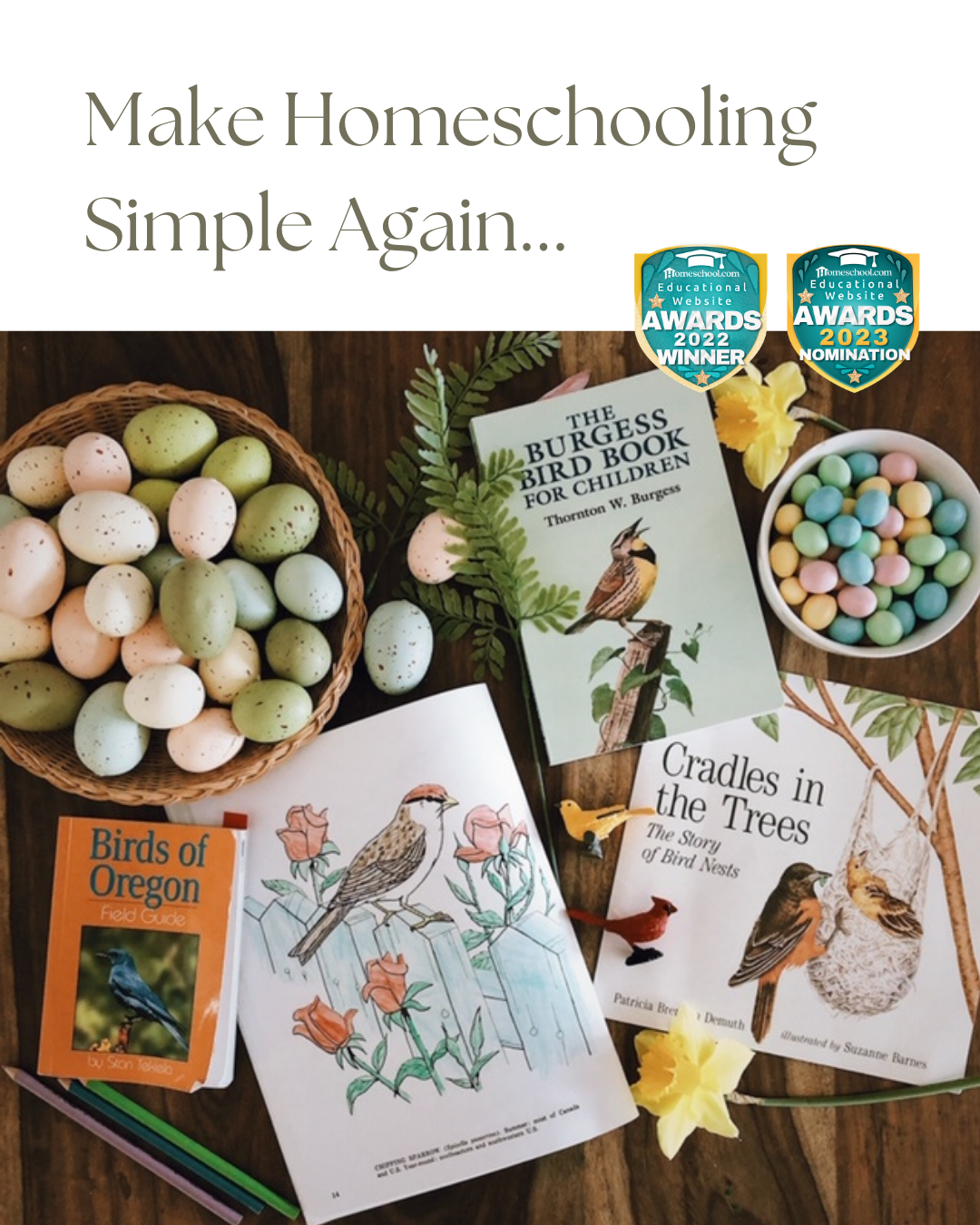
The method works from kindergarten through high school. My son is reading The Odyssey and Frederick Douglass with the same approach we used for Burgess Birds when both kids were small (they still bring up how excited I got over that one).
It's also flexible enough for both faith-based and secular families. Our family is Christian, and Mason's own writing is deeply rooted in faith, but plenty of families adapt her methods in their own way.
Most of all, Charlotte Mason is accessible. You don't need to read all six of her volumes before you begin. You need a good book, a willing child, and a few minutes of attention.
Living Books vs. Textbooks
Living books are the heart of a Charlotte Mason homeschool. A living book is usually written by one author who loves the subject, told in a narrative voice, and focused enough to go deep. It reads like a conversation with someone who can't wait to show you something.
A typical textbook is the opposite. It's often written by committee, covers everything at once, and strips out the voice and story that make facts stick. Mason called that kind of writing "dry" and warned it starves a child's mind.
A few living books we've loved
History: 50 Famous Stories Retold by James Baldwin. Simple Studies covers this book in our Heroes & Hope guide.
Science and natural history: Thornton Burgess's The Burgess Bird Book for Children, and Among the Meadow People by Clara Dillingham Pierson. I created Simple Studies guides for the entire Among the People series we loved it so much.
Geography: Richard Halliburton's Book of Marvels: The Occident. I loved it so much I read it a second time with my youngest and created a Western Marvels guide to go with it because some of it is outdated information but it's one of the most living books we've ever read considering the author traveled to and visited each and every place he wrote about!
Literature: The Hobbit as a morning read-aloud, and fairy tales from the Brothers Grimm on slow afternoons. Fairy tales continue to be a cornerstone in our homeschool, so much so I created a Simple Studies: Fairy Tales!
How Simple Studies uses living books
I created Simple Studies in 2019 because I kept watching the richest subjects get pushed aside when life got busy: nature study, geography, picture study, poetry, fairy tales. Every guide is built around a living book, not in place of one. You get the booklist, narration prompts, discussion questions, maps, and nature journaling ideas, so the book stays the teacher. Our Burgess Birds and Western Marvels guides are good examples.
"Can I just use library books?"
Yes! Many of our favorites came from the library or used bookshops. To vet a book quickly:
Read a page aloud. Does it sound like a person talking, or a summary?
Check the author. One author with real knowledge or love for the subject is a good sign.
Look for story. Characters, places, and events beat lists of facts.
Watch your child. If they lean in and ask for "one more chapter," you've found a living book.
Narration: The Core Learning Tool
Narration is simple: your child tells back, in their own words, what they just read or heard. That's it. In a Charlotte Mason home, narration takes the place of most worksheets, quizzes, and comprehension questions.
How narration grows with your child
Ages 6–9 (roughly grades 1–3): Oral narration. Read a short passage once, then ask, "Tell me everything you remember."
Around ages 9–10: Begin written narration gradually, perhaps one short written narration a week while oral narration continues.
Middle and high school: Written narrations get longer and more analytical, and become a natural bridge to essays.
Why it works
To narrate, a child has to pay attention the first time, sort what they heard, and put it into their own words. That one act builds comprehension, memory, and communication all at once. It also tells you instantly what landed and what didn't, no grading required.
Ways to narrate (beyond talking)
Drawing a scene from the chapter
Mapping where the story took place
Adding to a timeline or a Book of Centuries
Acting it out with siblings or toys
Building it with blocks or clay
A note from our table
When lessons aren't clicking or curriculum feels heavy, we go back to the simplest thing I know: read aloud, narrate, and notebook. My kids have used the same blank notebooks for years for geography, science, and history. They still flip back through old pages and remember lessons from years ago. Sometimes the most powerful education happens with a good book and a blank page.
And please hear this: narration is not a test. You don't need to grade it or correct every detail. It's how your child digests ideas, and some days a narration is two sentences. That's okay.
Nature Study & Outdoor Learning
In a Charlotte Mason home, nature study is a real subject on the schedule, not a reward for finishing "real" school. Mason was bold about this. For young children, she suggested four to six hours outdoors a day when the weather allowed.
That number can feel impossible, and that's okay. Start with what you can protect, maybe one long outing a week plus short daily time outside, and grow from there.
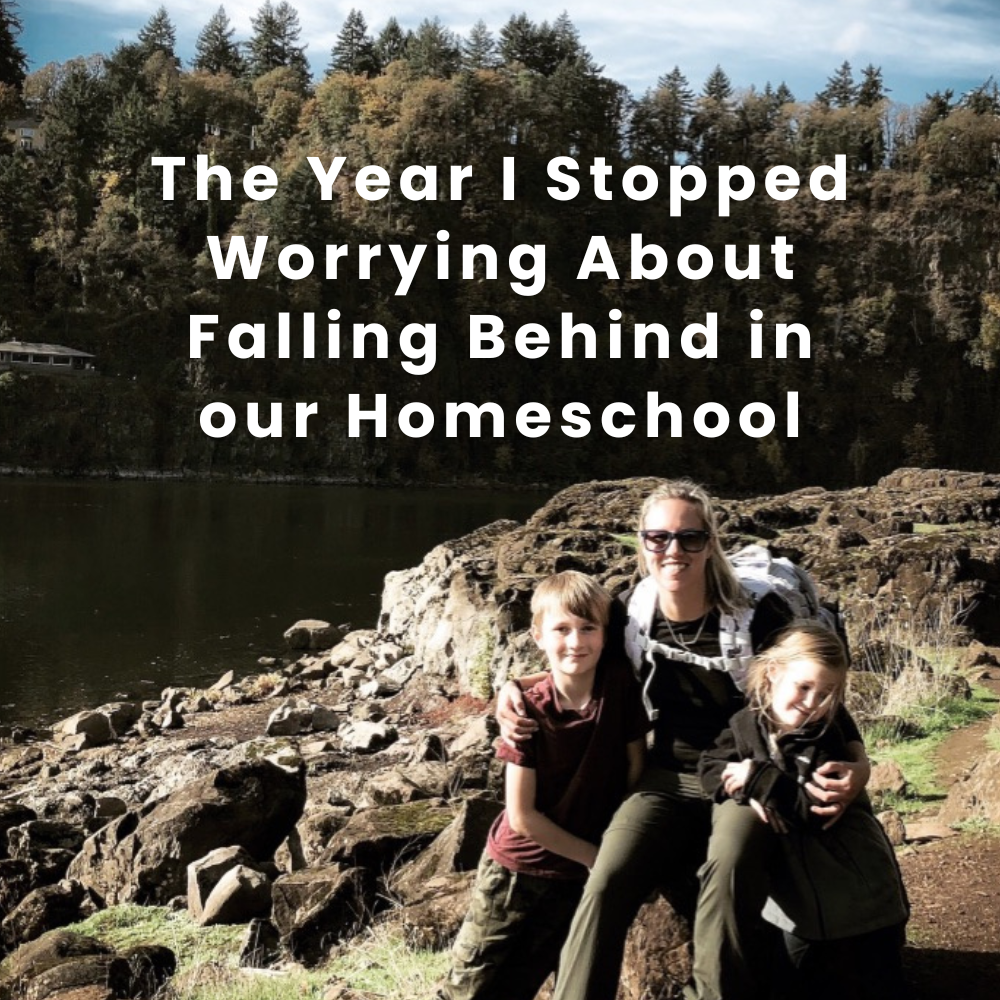
The year I stopped worrying about falling behind
I'll be honest: when my kids were little, I worried. I'd see other families finishing whole units while mine kept asking to go outside. Then one afternoon I stood at my kitchen window, watching them climb, run, and study the wildlife in our yard, and thought: what in the world am I doing?
So I stopped treating outdoor time as a reward. I made it the priority. We took weekly hikes, brought our read-alouds along, and saved the rest for after a long day outside. When each of my kids moved into more formal academics, the focus, curiosity, and ability to observe were already there. They hadn't fallen behind. They'd been learning all along.
Nature journals
A nature journal is where children sketch and label what they observe: a feather, a leaf, the bird at the feeder. It quietly combines science, art, and attention training in one practice. My daughter keeps her nature field guides handy for her nature journaling outings to this day.
The habit of noticing
Mason wanted children to look before they label. Before reaching for a field guide, ask:
What color is it? What shape?
How does it move? Where is it living?
What does it remind you of?
The name can come later. The noticing is the lesson.
Beginner nature study kit
A blank, unlined journal
Colored pencils or a small watercolor set
A hand lens or magnifying glass
A regional field guide (birds, trees, or wildflowers)
Our nature-themed Simple Studies, like Meadow Creatures, Pond Creatures, and Forest Creatures, include outdoor observation prompts and nature journaling guidance, so you know what to look for before you head outside.
Want a fresh nature study every month? The Simple + Fresh monthly membership delivers three deep-dive topics each month. You'll get simple lessons, booklists, nature studies, hands-on activities, picture study, and timeline images, all for $7 a month. Join the Simple Studies membership →
Short Lessons & the CM Schedule
Charlotte Mason lessons are short and varied: about 10–20 minutes for younger children, growing longer as they mature. The short lesson isn't a shortcut. It trains full attention, because a child learns that the time is brief and has to be used well. Switching between different kinds of work, like reading, then math, then artist study, then handwork, keeps the mind fresh.
The result is a school morning that's often done by lunch, leaving afternoons free for handicrafts, outdoor time, reading, and play.
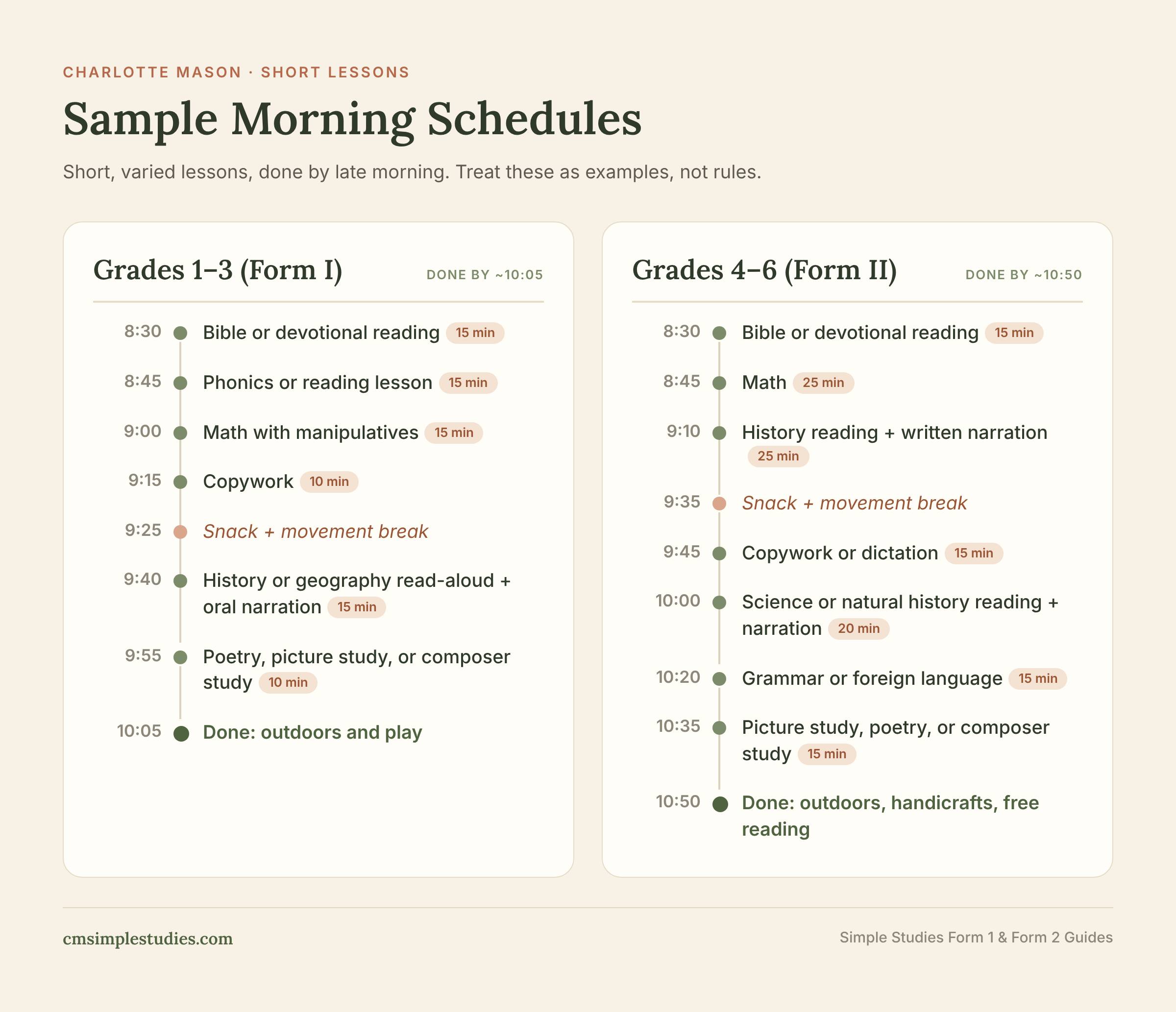
Treat these as examples, not rules. Your times will shift with naps, siblings, co-op days, and the weather. On mobile, stack these two schedules vertically.
Masterly inactivity
One of Mason's most freeing ideas is masterly inactivity: knowing when to step back. You set up the lesson, offer the book, and then let your child do the work of thinking and narrating. You don't hover, explain everything, or rescue every struggle. It feels strange at first, but this is how children learn to own their education.
What about screens?
Most CM families keep the morning lesson block screen-free. Real books, paper, and conversation do the teaching. Screens aren't forbidden, but they come later, if at all. We still do most lessons with paper and pencil at the kitchen table, and I've never regretted it.
Want this done for you?
Our Form 1 Guide (Grades 1–3) and Form 2 Guide (Grades 4–6) lay out CM-paced lessons by form, and the Simple Studies membership adds fresh, ready-to-use topics every month.
Habits, Atmosphere & Discipline
Remember Mason's phrase, education is an atmosphere, a discipline, a life? Living books and nature study feed the "life." Here's what the other two look like at home.
Atmosphere: your home is teaching
Children learn from the environment they live in every day. That doesn't mean a Pinterest-perfect school room. We've never had one. It means:
Books within reach, not hidden away
Nature nearby: a window bird feeder, a shelf of found treasures, regular walks
Beauty present: a print on the wall, music playing, flowers on the table
A peaceful tone, with fewer rushed mornings and more real conversation
Discipline: building good habits
In Mason's language, "discipline" isn't punishment. It's the training of good habits, like attention, obedience, truthfulness, tidiness, and a pleasant manner. She compared habits to rails that let a child's day run smoothly without constant correction.
The approach is gentle and focused:
Pick one habit to work on, such as "full attention the first time I read."
Practice it consistently for several weeks before adding another.
Expect lapses and keep going without lectures or shame.
Celebrate quietly when the habit starts to take hold.
Let me be honest about habits
I'm terrible at modeling habits myself. I love spontaneity. One Tuesday morning, we were supposed to go to our homeschool community, but every part of me wanted to drive to the Oregon coast instead. I actually stood in my bedroom and cried.
My husband gently reminded me: you might thrive on spontaneity, but our children need consistency. He was right. One of my kids genuinely gets anxious when plans change without warning. So we went to community that day and to the coast the next.
I share this because Charlotte Mason's habit training isn't only for our children. It shapes us too. You don't have to be naturally structured to give your kids a steady rhythm. You just have to keep showing up.
Parent-led, not parent-intensive
Charlotte Mason is parent-led but not parent-exhausting.
As habits of attention and narration take root, children become more and more self-directed. By the middle and high school years, they're reading, narrating, and wrestling with ideas on their own, and you get to become their discussion partner.
How to Start: Practical First Steps
You don't need to overhaul your whole homeschool. Start small, start this week, and let the method grow on you.
Choose one living book per subject. Read aloud daily for two weeks before adding anything else. A history book, a nature book, and a good story are plenty.
Practice oral narration after every reading. Ask one question: "Tell me everything you remember." Then listen without correcting.
Start a nature journal. Set aside at least one 20-minute outdoor observation session each week, and grow from there.
Map out a simple morning block. Choose 3–4 subjects at about 15 minutes each, and use the sample schedule above as a starting point.
Let a guide carry the planning. Browse our Simple Studies guides to find ready-made, CM-aligned units for your child's grade, or start with the Form guide for their age.
After a month, notice what's working. Then add one new thing, like picture study, poetry, or a second living book.
That slow, steady approach is how a Charlotte Mason homeschool takes root.
Frequently Asked Questions
Is Charlotte Mason accredited or legal?
Charlotte Mason is a method, not a school, so it isn't "accredited" on its own, and it doesn't need to be. Homeschooling is legal in all 50 states, and you can use the CM method under any of your state's legal options. What changes from state to state is record-keeping. Narration notebooks, nature journals, booklists, and a simple portfolio of work make excellent records for evaluations or reviews. Check your state's homeschool law for what's required.
How is Charlotte Mason different from unschooling or classical education?
Unschooling lets the child's interests drive nearly everything. Charlotte Mason honors curiosity too, but the parent still sets a broad, intentional "feast" of subjects and books.
Classical education follows stages (grammar, logic, rhetoric) and often emphasizes memory work and drills. CM shares the love of great books but leans on narration, short lessons, and nature in place of heavy memorization. Plenty of families blend the two. I directed a CM- and classical-inspired community of over 100 students, and not one family called themselves purist. We were richer for it.
What if my child won't narrate?
This is so common! Try these:
Shorten the reading. One paragraph may be enough at first.
Tell them before you read that you'll ask them to narrate.
Narrate first yourself so they hear what it sounds like.
Switch the mode. Let them draw, act it out, or narrate to a sibling or stuffed animal.
Check the book. A dull book makes narration hard. A living book makes it easier.
Give it time. Narration is a habit, and it builds over weeks, not days.
Do I need to buy a full curriculum?
No. Many families build a CM homeschool with library books, a few good guides, and time outdoors. Simple Studies guides are designed to be used à la carte. You can pick one subject or topic, use it alongside what you already have, and add more as you go. Many families also use ESA funds for Simple Studies through ClassWallet, Odyssey, or Step Up marketplaces.
Can Charlotte Mason work for kids with learning differences?
Often, yes. Short lessons, oral narration, hands-on nature study, and rich read-alouds suit many children who struggle with traditional workbooks. Every child is different, so adjust lesson lengths, offer more oral work, and use audiobooks freely. Work alongside any specialists or therapists your child sees. The method's respect for the child as a person makes it naturally flexible.
ou Don't Have to See the Whole Road
In 2019, six years into homeschooling, I stood on a trail behind my two kids and wondered if the slow, gentle life we were building could actually last. Another six years later, I can tell you it did. Not because we kept the same pace every year, but because we kept coming back to the same simple things: good books, time outside, short lessons, and a lot of grace.
That's what Charlotte Mason offers you, too. Start with one living book, one narration, and one walk. You're building something you can't see yet.
Ready to begin? Browse Simple Studies guides or join the monthly membership for fresh CM-inspired topics delivered the first week of every month.
Keep reading
The Year I Stopped Worrying About Falling Behind (nature study and outdoor time)
10 Homeschool Game-Changers (read aloud, narrate, notebook)
When Your Homeschool Heart Craves Spontaneity But Your Child Needs Structure (habits)
When You're a Charlotte Mason Family in a Classical Community