Not every homeschool subject deserves equal time. Discover why strength-based, delight-directed homeschooling works better than a one-size-fits-all curriculum, and how to structure your homeschool day around each child's God-given strengths and interests.
Read More🫐 If Blueberries Were Ideas: What's Our Job as Homeschool Parents?
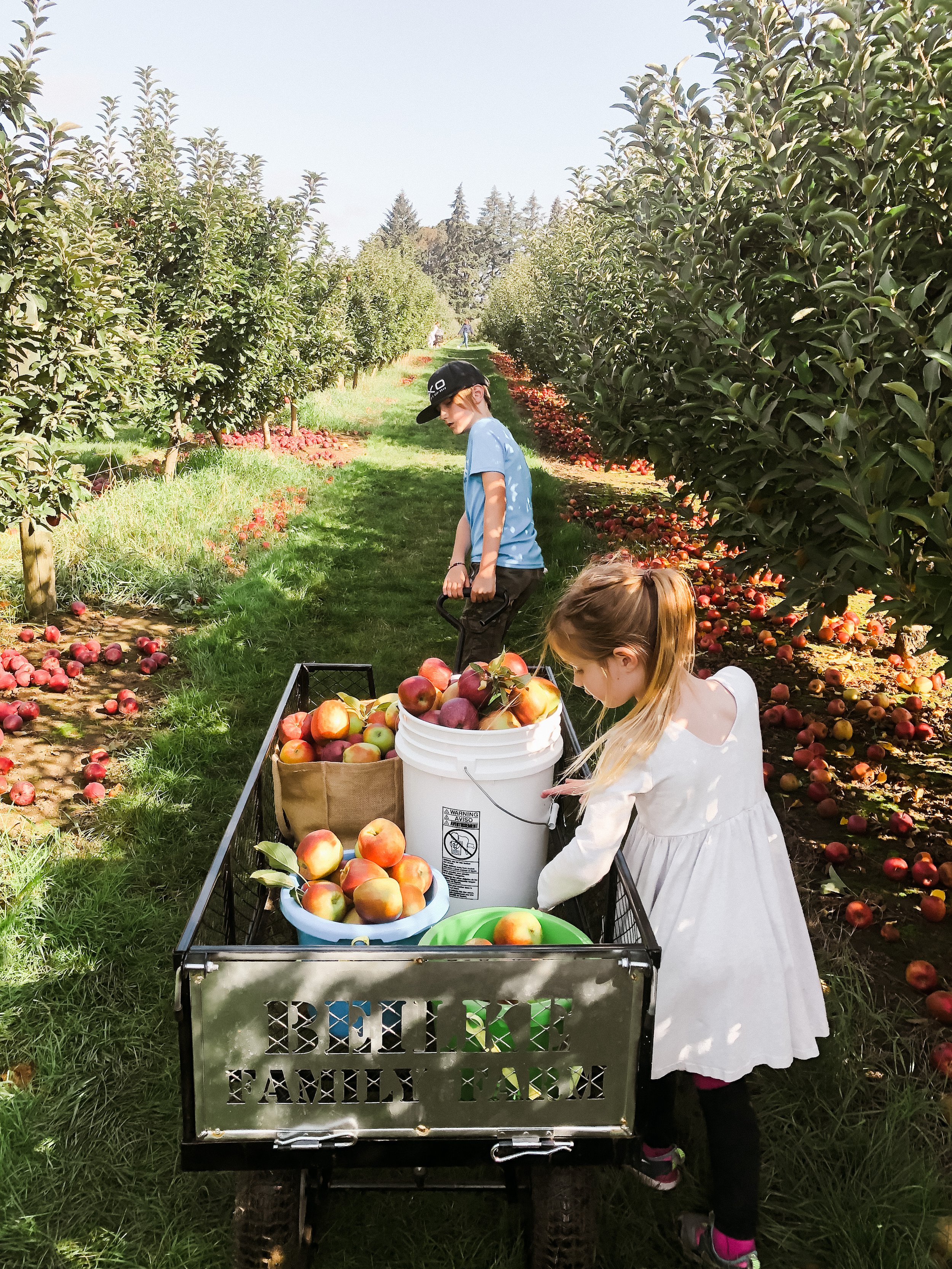
I was at a women's church retreat last weekend when the topic of picking fruit with our kids came up over dinner. I sat there a little dazed, as memory bubbled up with affection. All those fruit-picking adventures in Oregon when my children were young.
We'd show up at the blueberry, apple, or strawberry orchard, grab a bucket, and head out.
We'd start picking fruit, and then...
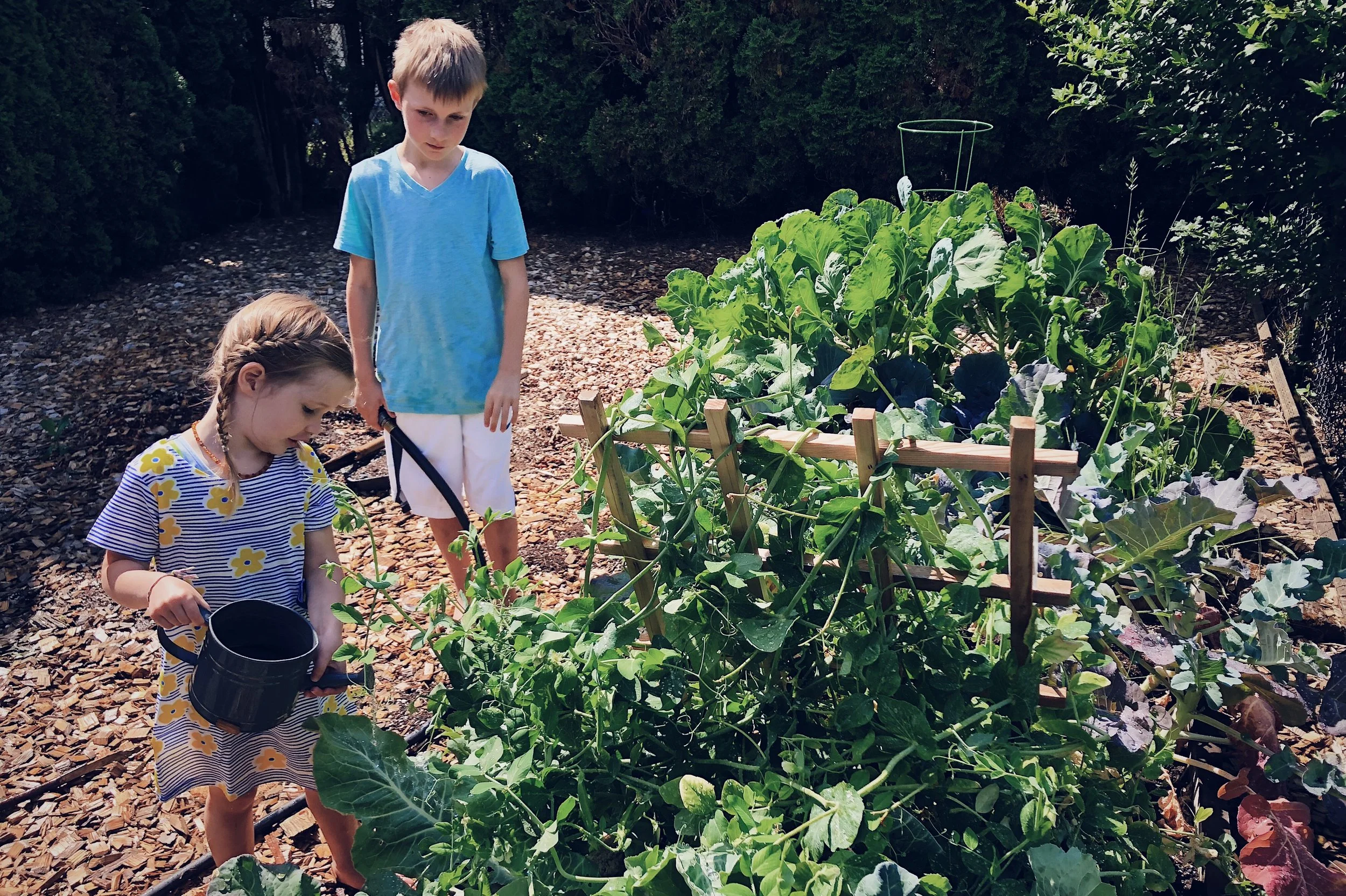
One went in the mouth.
One went in the bucket.
One dropped without a second thought.
Whether it was a plump blueberry, a sun-warmed strawberry, or a crisp little apple, it didn't matter. The pattern was always the same.
(Yes, this all reminds me a little of Blueberries for Sal by Robert McCloskey.)
But it made me think…
I always wanted that bucket as full as we could make it. I'd watch my kids and quietly will them toward the fullest clusters, the heaviest branches, the brightest red berries hiding under the leaves. More, more, more.
But God didn't fashion us that way.
Some fruit goes straight in the mouth. It gives us exactly the energy we need to tackle today. Some drops to the ground, never to be seen again. And some gets dropped in the bucket, saved and stored and carried home for later.
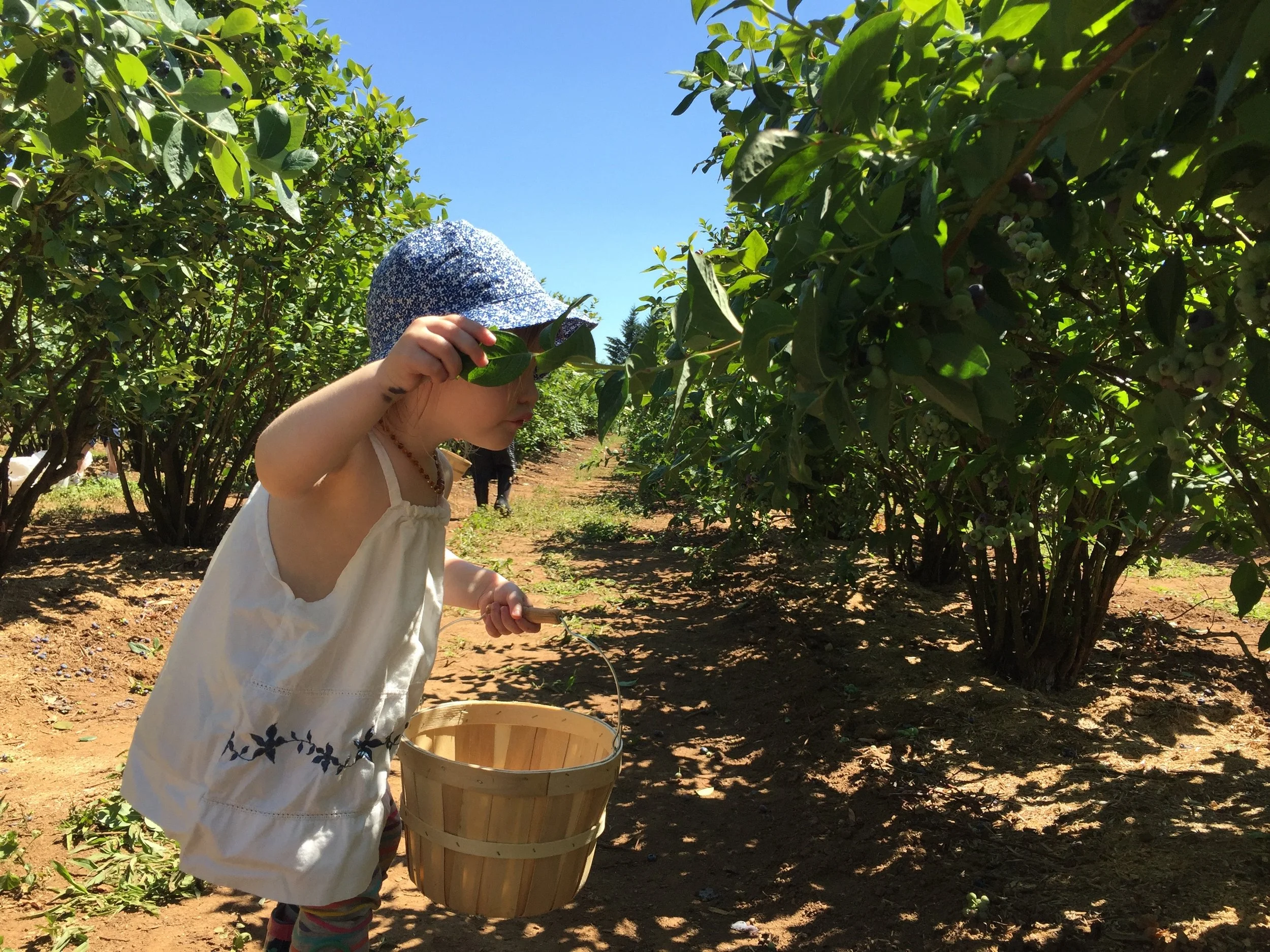
Now I see that fruit the same way I see lessons and IDEAS.
Our homeschool, and our life of faith, is an orchard. The lessons, the books, the Scripture passages, the rabbit trails, the conversations at dinner, the chapters read aloud.
They're all hanging there on the branches, ripe and waiting.
Some ideas are blueberries, small and quiet, easy to miss, but packed with something good. Some are strawberries, bright and beautiful, the ones that catch your child's eye first. Some are apples, sturdy and substantial, the kind that keep.
Our children move through this orchard the same way they moved through those orchards in Oregon.
They eat what gives them energy today. They bucket what they'll need later. They leave behind what isn't ripe for them yet.
And they should.
The lessons that truly take root aren't the ones we pushed hardest or planned most carefully. They're the ones our children reached for themselves and ate on the spot, hungry, unhurried, present.
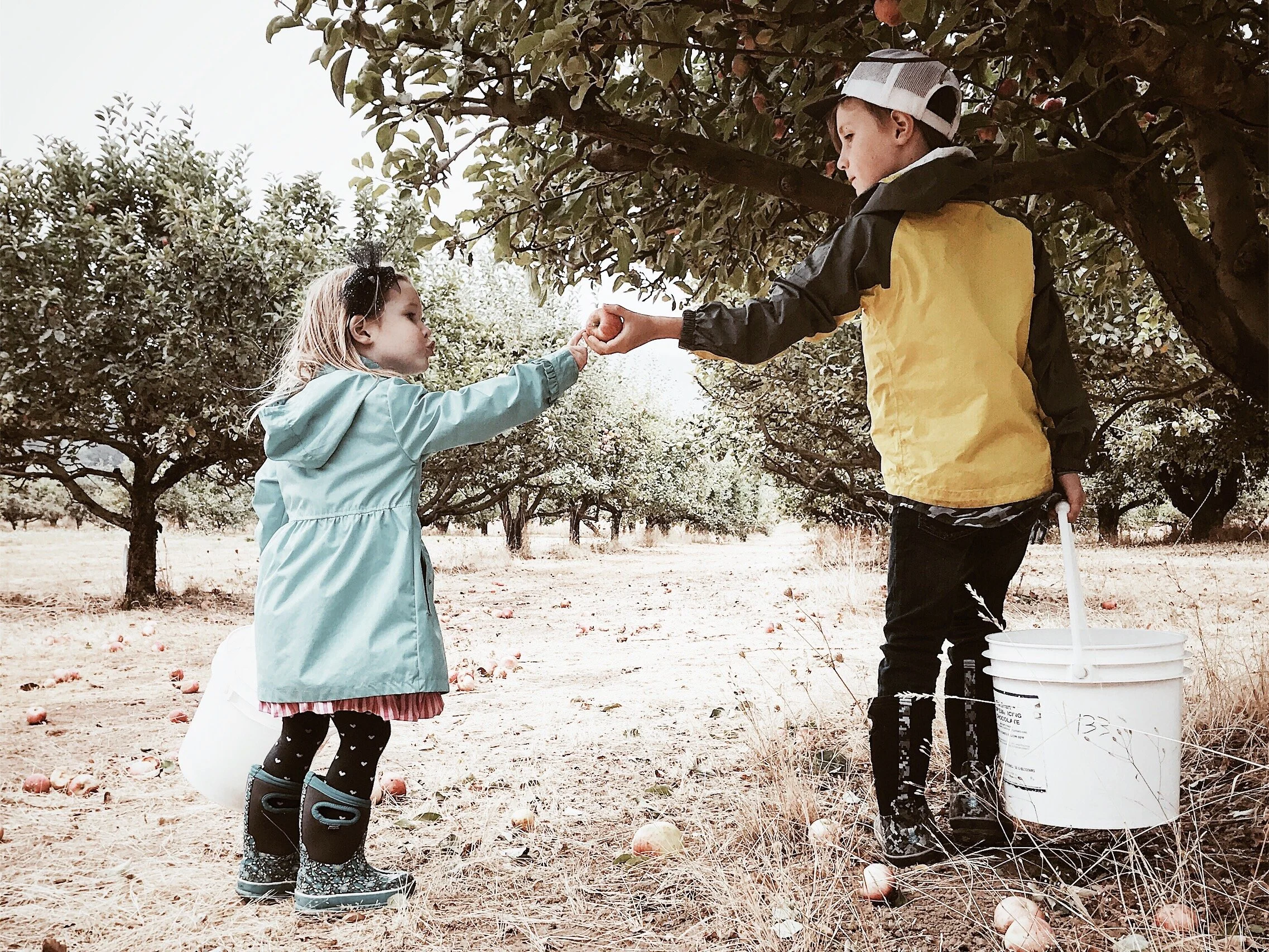
Some ideas get consumed quietly and become the very architecture of who they are. You won't see it happening. You'll just look up one day and realize it's already built into them.
Some will ferment slowly into “jam” they'll keep and share with the world one day in their own time.
Maybe that looks like Scripture memorized at age seven that rises to the surface in a hard season at twenty-five. Those quiet verses neatly tucked into their subconscious.
And some will simply fall to the ground.
A berry drops from little fingers and hits the dirt. An apple tumbles into the grass. A strawberry gets set down and left behind.
And here’s what I had to learn: you don't scramble to pick it up. You don't brush it off and press it back into their hand. You don't say "wait, you needed that one."
You let it go.
Because not every idea is meant for every child. Not every lesson is theirs to carry.
Some things will fall away and that child will still grow up whole and good and exactly who they were meant to be, without ever picking up that particular piece of fruit.
It was never theirs to begin with.
The dropped berry is not a failure of the orchard.
It is not a failure of your child.
And mama, it is not a failure of YOU.
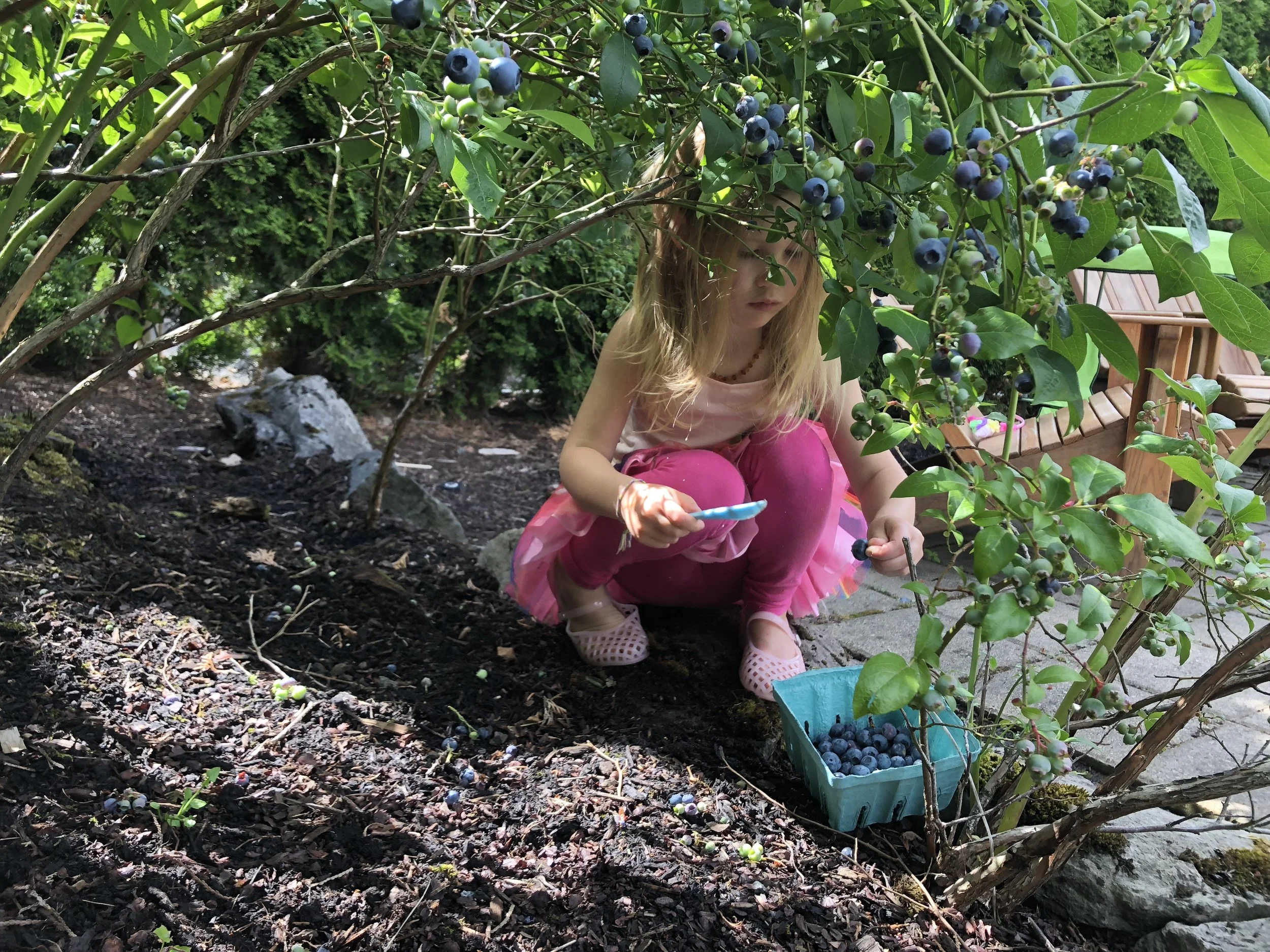
So I’ve come to terms with the fact that it is not my job to fill their bucket.
It's not my job to do the choosing, the sorting, the deciding what's ripe enough or important enough or spiritually significant enough.
I used to think a good homeschool day meant a full bucket. A covered checklist. Verses memorized, lessons completed, boxes ticked.
But that's not how children grow.
It's God's job to be the orchard. My job is just to be the branch, the hands and feet of Jesus, stretched out and offering what I have.
To be fruitful and offer beautiful, colorful, abundant ideas.
And then to reach out with the very best God graciously gave me to offer.
I can only stretch so far. Many blueberries won't make it off the branch. Many strawberries will go unnoticed in the grass. Many apples will fall before anyone reaches for them.
But many, so many, will be consumed. And those quiet, consistent, diligent ones are the ones our children will grow by most, often in moments we never thought were doing any good. Long after we tucked away the Bible and the books. Long after they left our table. Long after we stopped wondering if any of it was working.
It was working.
We can't expect them to be drawn to every branch and every cluster and every bright patch of red hiding in the leaves.
We just invite them into a glorious orchard of fresh abundance.
And we trust that the right ones will be picked.
If you read this far, you might be thinking, “isn’t this a lot like Matthew 13, The Parable of the Sower?” And I would tell you, yes, my friend. It very much is! Isn’t it beautiful when God’s word inspires our thoughts, and IDEAS? Some stick with us, and some don’t. But if we’re consistent, present, and in the Word – He’ll speak to us in ways that draw us nearer to Him.
The Year I Stopped Worrying About Falling Behind
I was doing everything "right." My curriculum was carefully chosen. My lesson plans were organized. We had our books and and our scheduled study time. And yet, there was this constant, gnawing worry in the back of my mind: was this what I actually wanted their childhood to look like?
I'd look at other homeschoolers' Instagram feeds and see kids completing entire units while mine were asking to go outside again. I'd check the recommended pages in our curriculum guides and feel that familiar guilt—we weren't hitting the benchmarks the way we "should." The pressure was real, and it was exhausting.
Then it hit me…
I can't pinpoint exactly when it happened, but I remember standing in my kitchen one afternoon, looking at the stack of books on the table and then at my kids through the window, running, playing, climbing, observing wildlife...
I’d take them on weekly hikes and they JUMPED at the chance to head out on the trails.
And I thought: what in the WORLD am I doing?
My kids weren't sitting in traditional school. They weren't being forced to stay at desks. So why would I consider recreating that same pressure at home?
That's when I made the decision to lean into the outdoors and stop worrying.
God would handle the rest.
I stopped treating outdoor time like a reward for finishing lessons.
I made it the priority.
I stopped counting the hours spent outside as "lost" study time and started seeing it as the actual education.
It felt risky at first. There's something about letting go of the visible, checkable boxes that our culture says equals learning. No workbook pages completed, no standardized benchmarks met—just my kids exploring, discovering, asking questions, moving their bodies, building skills they couldn't get from a textbook.
I didn’t put down the books I was reading aloud for our lessons – I simply brought them with us or read them after a long day of being outdoors.
And then I realized – they weren't falling behind. They were learning differently, sure, but they were learning. And more importantly, they were becoming the kind of people we society needs our children to be…
When my oldest was ready to move into more formal academics, the foundation was there. The curiosity was there. The ability to focus and observe and wonder—that was all there.
Then my youngest moved into more formal lessons and the same thing happened.
And it hadn't come from a lesson plan. It had come from hours of freedom, outdoor exploration, and the space to just be kids.
The younger years matter, but not in the way I thought they did.
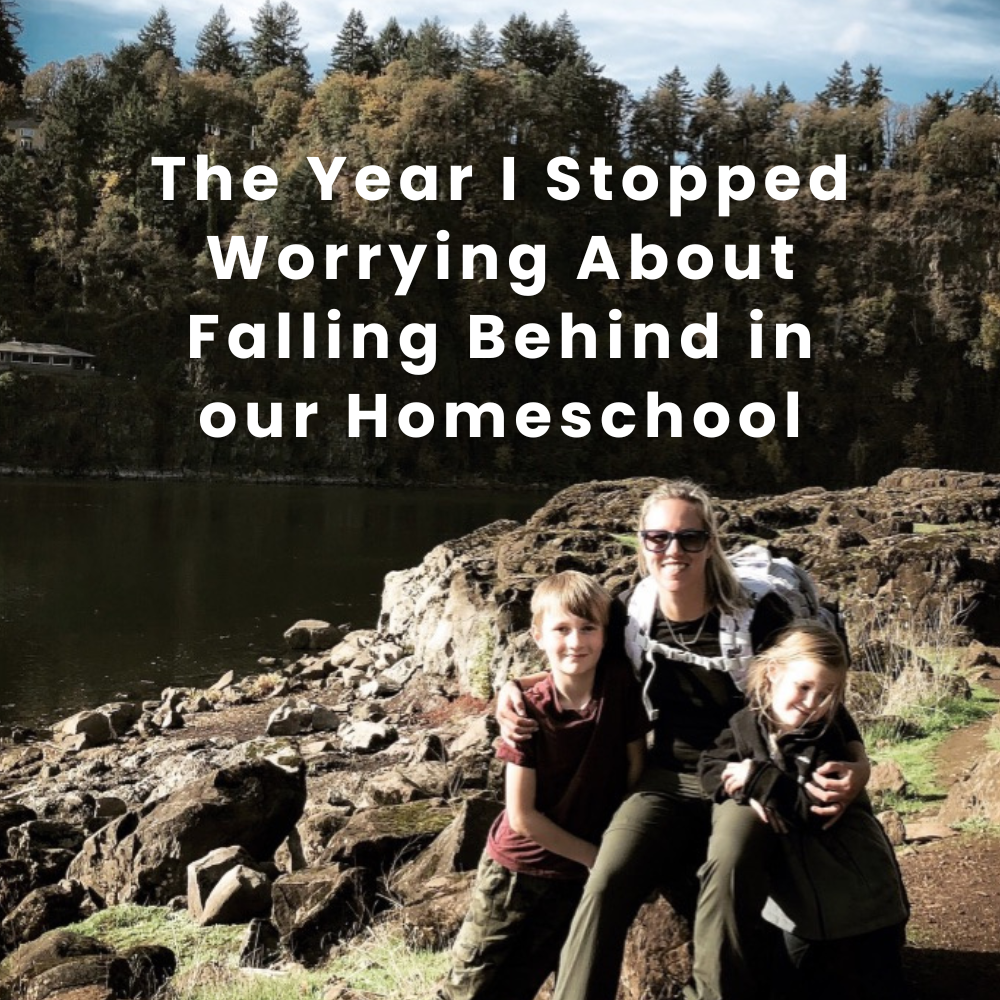
They're not about racing through material. They're about building a relationship with learning itself. With the natural world. With their own capacity to discover and think and move through the world with confidence.
I stopped worrying about falling behind the year I realized that "behind" was a meaningless measure for what we were actually doing.
Now, when homeschool moms tell me they feel guilty about not doing formal lessons, or worried their kids are missing something, I tell them what I wish someone had told me: those hours outside matter more than you think. The climbing, the exploring, the noticing, the wondering—that's not time away from education.
That is the education, especially when they're young.
If you're feeling that pressure too, if you're questioning whether you should be doing more structured academics, here's my encouragement: trust your instincts. Those are usually right. And if you need permission and a framework to actually do what you know matters, the 1000 Hours Outside Mega Bundle exists for exactly that reason. Over 450 outdoor learning activities and 85 complete units designed to help you build a homeschool that prioritizes time outside—without guilt, without worry, and without missing a thing.
Your kids won't fall behind. They'll just get to be kids for a little longer. And that pays off in ways you won't see until years later. 💚