If your children light up over numbers and experiments but you'd rather be reading literature together, you’re in very good company.
My oldest is a math whiz. He started teaching me Algebra when he was 12 years old. Twelve. I was sitting there nodding along, trying to look like I understood what he was showing me.
My youngest? She adores science. She has taught me about species I had no clue existed and creates her own experiments on a daily basis.
These children came out of me and yet somehow bypassed everything I was naturally gifted in and went straight to the subjects that make my eyes glaze over.
So when high school started creeping into view and I started researching "Chemistry credits" and "AP Physics courses", I had a choice to make. I could panic. Or I could find the resources and people who actually know what they're doing.
Friends, I cannot wait to share what I found with you.
If you have a high schooler who loves Chemistry or Physics, I'm sharing something at the end of this post that I think could be a really good find for your family. But first, a few things I believe matter just as much as any curriculum choice you will make during these years. Because if we get these right, the rest has a way of falling into place…
Your Job Is Not To Be The Expert
Let me say this plainly: you do not have to know everything your child is learning.
I never have, and I've made my peace with it.
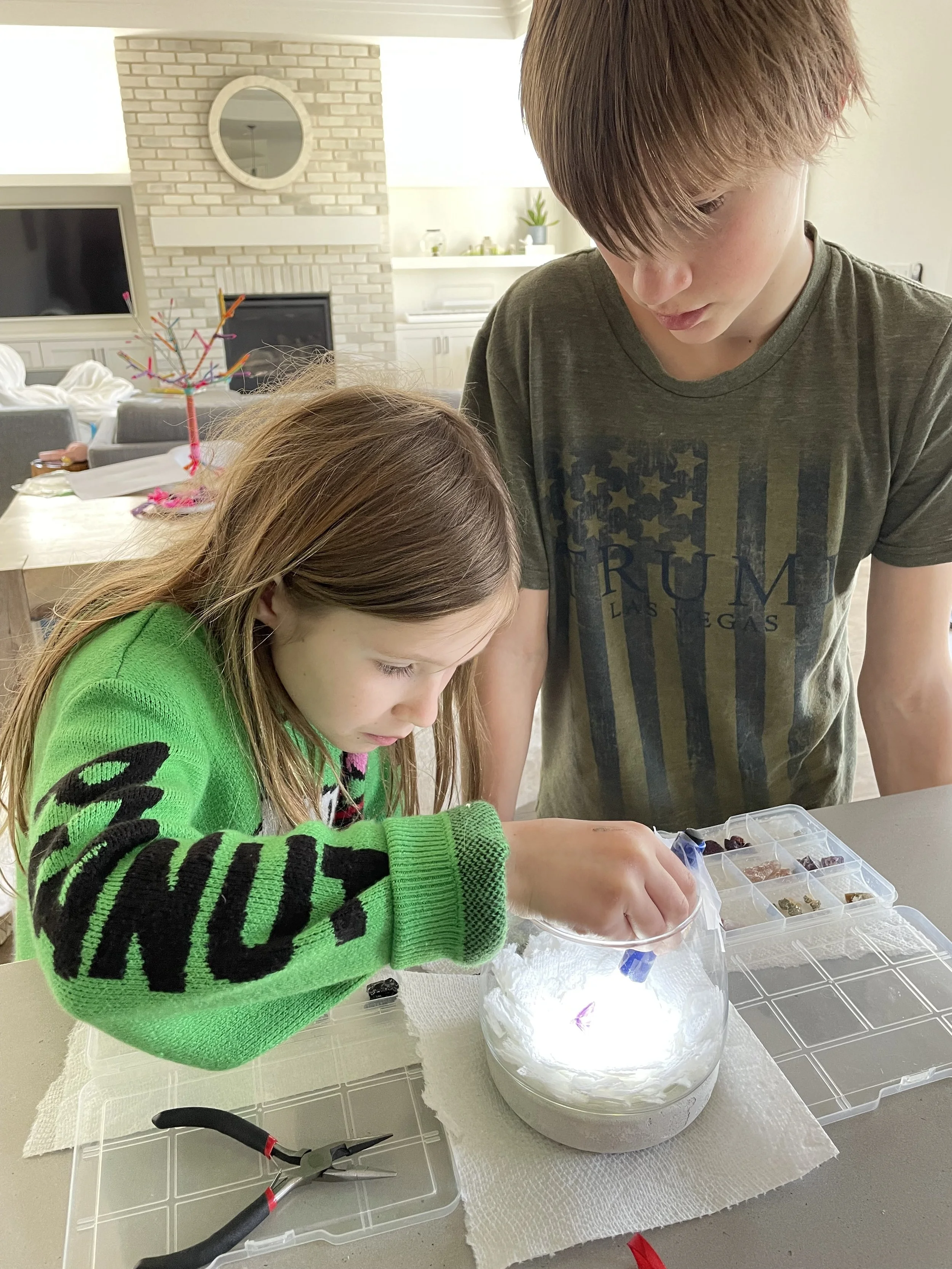
We are not a "kitchen labs" family over here. I am not in the kitchen each week with liquid nitrogen. The most I have managed is a science kit they assembled themselves, or leaning on our co-op for anything that required actual hands-on experiments.
A nature journal and a good walk outside will always win over a Bunsen burner in my world.
And yet here we are, homeschooling kids who love the very subjects that make my eyes cross.
Here is what I have come to believe after years of doing this: your job is not to be the expert. Your job is to help find the right resources and people to help them go further than you can take them, and stay close and encourage them through it.
Focus On Their God-Given Strengths
You’ve heard me say this before. But I am going to keep saying it because I believe it more every year we do this.
God gifted your high schooler with specific strengths for a reason.
Things that light them up, that come naturally, that their siblings may or may not share at all. I think one of our most important jobs as homeschool parents during these years is to help our kids figure out what those strengths are and then actually lean into them instead of spending all our energy dragging them toward things they have zero interest in.
This doesn't mean we ignore the hard stuff or skip subjects that matter.
It simply means we hold those things appropriately, with a bit more lightness, and we stop treating every academic weakness like a five-alarm fire.
The 80/20 rule has been freeing for us in all our years of homeschooling. Let them spend the bulk of their time going deeper into what they love. Use the rest of the time for the foundational skills and requirements that matter. And then trust that a child who genuinely loves what they're learning is going to get somewhere meaningful.
Raising Kids Who Love Science
Can I tell you something I have come to appreciate more and more as my kids have gotten older?
A child who loves science is a child who is naturally curious about the world around them. And curiosity, friends, is one of the greatest gifts we can nurture in our homeschool.
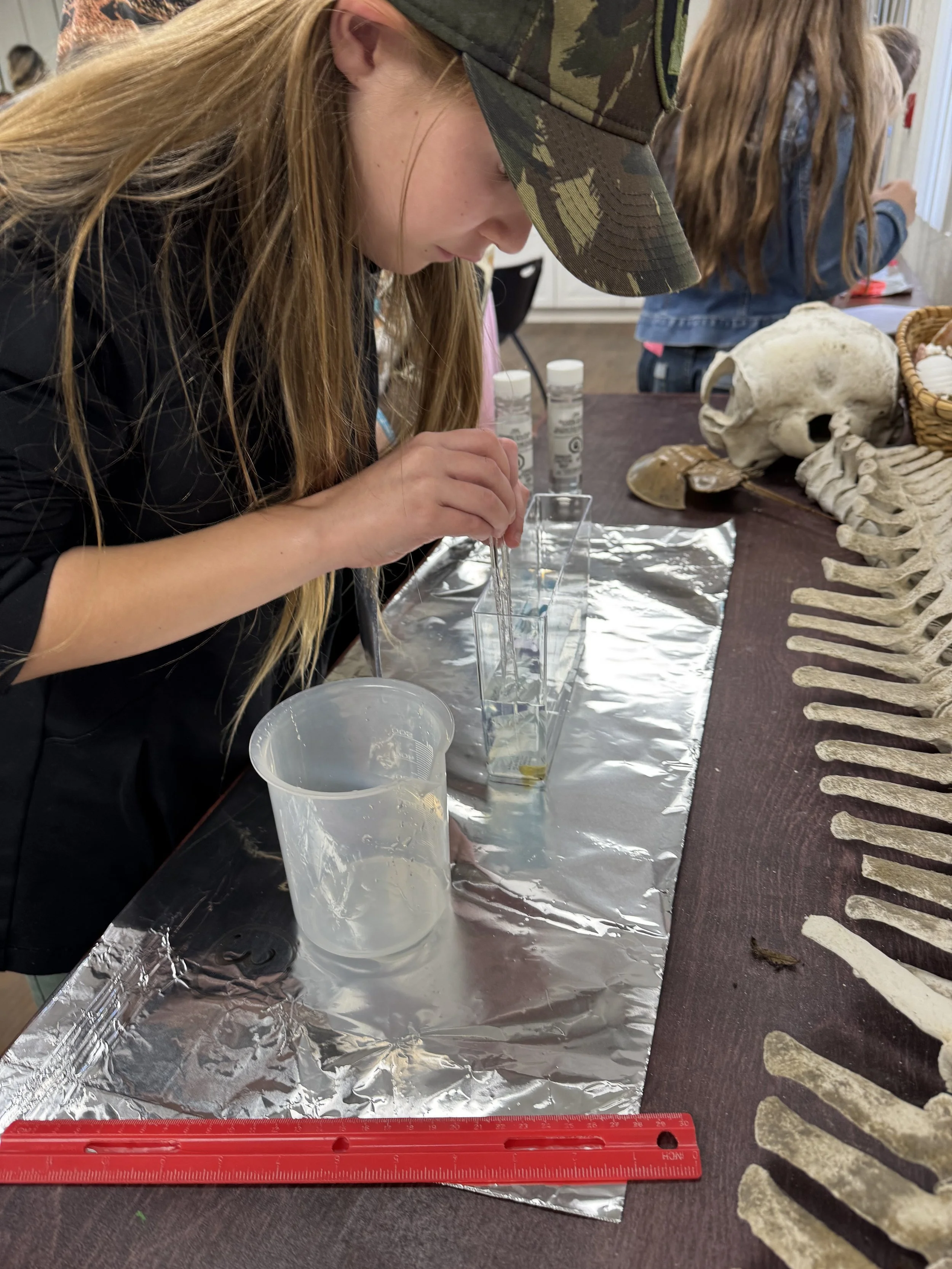
Science kids ask a lot of questions. They take things apart to see how they work. They notice things the rest of us walk right past. They do not just create experiments. They create experiments that do not work, and then they try again.
That persistence, that willingness to fail and keep going, is going to serve them in ways we cannot even fully see yet.
As Charlotte Mason believed, the best education is one that feeds a child's natural curiosity rather than replacing it with rote learning and busywork. A science-loving student does not need to be pushed. They need to be pointed in the right direction and given the tools to go as far as their curiosity will take them.
Your Relationship Matters Most
This is the one that sneaks up on you in the teen years.
We spend so much energy on the academic side, curriculum research, credits, co-ops, college prep, and meanwhile our teenager is sitting right there in front of us, changing faster than we can keep up with. And somewhere along the way, a lot of us start pulling back on the one-on-one time because it feels like they are pulling back. Like they need us less now.
I have found the opposite to be true in our house. They still need us; they just need us differently.
Gordon Neufeld and Gabor Maté write in Hold On to Your Kids that "We need to make it a habit of collecting our children daily and repeatedly until they are old enough to function as independent beings."
Daily and repeatedly.
Even when they seem like they have got it together. Even when they shrug at your questions and disappear into their rooms.
Your math whiz. The sports guy. Your crafty girl. Your know-it-all child. The social kid. The one who is lightyears ahead of you in the subjects that light them up or is busy being invested in their hobbies.
These are good things.
But they still need you. Not just to tell them to finish their lessons and do their chores. But to know them. To show up. To be the person they come home to after a hard group gathering, sports practice or a new job that did not go the way they hoped.
An Amazing High School Chemistry and Physics Resource
So. You have a math or science loving high schooler. You have given yourself permission to not be the expert. You are staying close and investing in the relationship. Now you need the right people in your corner for the academic side.
Friends, I want to introduce you to Chemistry-Prep and Physics-Prep.
Mark Kernion spent 33 years teaching chemistry in the classroom, received the Yale Educator Award for his teaching, and has written multiple books published by Barron's. His twin brother, Jack, teaches AP and Honors Physics with a doctorate in science education. Together they've built fully guided AP Chemistry and AP Physics courses designed specifically for homeschoolers.
Can I get a hallelujah?
Now, if online learning isn’t your thing, I completely understand. We did not introduce online classes for our oldest until his later middle school years, on topics he was passionate about that I did not have the capacity or knowledge to teach him at the time.
What I will say is this: if you have a choice between trying to teach your child something you genuinely do not understand, or allowing them to take an online course on a topic they are excited about, taught by people who are truly passionate about these subjects…
You can probably guess which one I would vote for.
Why These Courses Work
What makes these courses stand out, especially for those of us who were not naturally science-y people, is that they allow you to guide instead of feeling the weight of teaching something you may not know.
These courses are self-paced, which means your student has real structure and real instruction without being locked into a rigid daily schedule.
And the lab component, the piece that would make me break into a cold sweat just thinking about it, is completely handled.
Both AP Chemistry and AP Physics require 25% of course time to be hands-on lab work. That is a College Board requirement, not a suggestion!
Mark developed a real lab kit and manual that students use at home with actual equipment, integrated into the coursework as they go. AP Physics with lab for homeschoolers is handled the same way over at Physics-Prep.
The part that would have sent me into full panic mode is just... sorted.
These are complete, affordable AP Chemistry and AP Physics courses. Thorough, flexible, and designed with your homeschool student in mind.

Try Before You Commit
The entire first chapter of the AP Chemistry course, including the pacing guide, videos, slide presentations, class documents, and the chapter test, is free and open with no password needed.
Go take a look: chemistry-prep.com/ap-chemistry-through-cp
Over at Physics-Prep, Jack offers the same thing. Head to physics-prep.com and look for the link on the right side of his homepage to access the first chapter of any of his courses for free.
Let your student dig in. Let them watch a video and get a feel for the pace and the teaching style. And enjoy taking these things off your already long list.
A Quick Word on Transcripts
Transcripts matter and I am not going to pretend otherwise.
But when a student is pursuing something they genuinely love at a genuinely rigorous level, the transcript takes care of itself. An AP Chemistry or AP Physics credit from a course taught by a master teacher, with real lab hours documented, is a strong and credible line on any homeschool transcript.
Build your records as you go. Keep it simple. And trust that a child who loves what they are studying is telling their own story, one that any college worth attending will recognize.
You do not have to be the science know-it-all to help your teens through their science labs!
You may decide to instead find the resources and people who are.
This post is sponsored by Chemistry-Prep and Physics-Prep. All thoughts and opinions are my own.