"There is a time for everything, and a season for every activity under the heavens." — Ecclesiastes 3:1
"He has made everything beautiful in its time... I know that there is nothing better for people than to be happy and to do good while they live. That each of them may eat and drink, and find satisfaction in all their toil — this is the gift of God."
— Ecclesiastes 3:11-13
Summer homeschool for us isn’t a sprint. It's not a frantic attempt to make up for lost time or cram in what we missed.
It’s a chance to settle into continuing to learn and grow without the pressure of a full school year schedule packed with community gatherings, sports and activities, and to return to the things we love most. ❤️
But I'll be honest with you: I’ve hit September when my kids look at me like I’ve legit lost my mind.
“I have no idea what we did in spring, mom.” “How do you spell (insert super easy word to spell here)?” “What’s a verb again?”
Over the years, I've learned that summer doesn't have to be all-or-nothing. There's a sweet middle place for these short months: one where we're still living gently and beautifully in the spirit of our Charlotte Mason homeschool, while quietly, consistently reinforcing what we've already built.
Here's how we actually do it.
☀️ We Stay in the Books
This might seem obvious, but I want to say it plainly: we don't stop reading in summer.
We slow down, yes. We read on the back porch. We read in the car. We listen to audiobooks on long drives to nowhere in particular. But the books never fully close.
For us, living books are not just a curriculum strategy – they're literally the heartbeat of how we learn. (Trust me, it works).
And summer for us is when we discuss new ideas that have grown in us over time from the books we put down a few months ago because generally speaking, we moved right along to the next.
☀️ Choice Within a Container
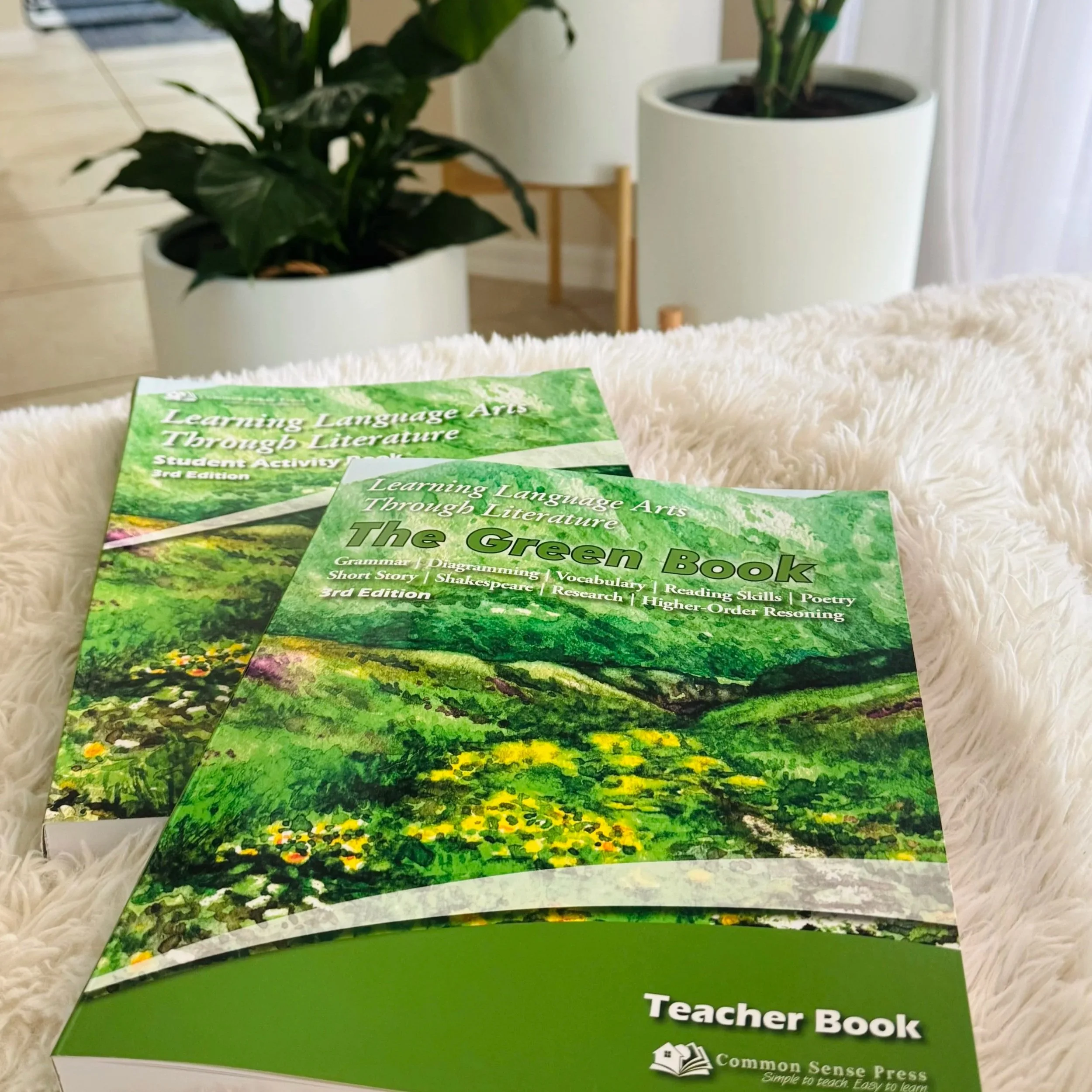
Another way we build confidence and ownership in our children is by giving them choice within a container. I've already gone through The LLATL Green Book (see below) and tabbed the pages I'd like my daughter to cover this summer.
But she gets to choose the order.
It tells her: I trust you. You know yourself. You can do this. For our son, I've set out a basket of books and curriculum left over from spring, and rather than scheduling what he reads each day, he gets to choose what he picks up, and how fast or slow he moves through it.
And yes. I pay my children to read in the summer. $$$
I know, I know. They already love to read. But there's something about a little tangible reward that adds a spark of anticipation when summer arrives. Maybe one book is worth five dollars and another is ten.
The excitement of earning something each summer is something they get excited about. We could require a set reading time each day, and we've done that too. It's fine. But summer is special, and I want it to feel that way.
Here's why this simple practice has become one of my favorite summer rhythms:
It creates ownership over their learning
It teaches them that diligence has reward, even in things they love
It builds follow-through and finishing, not just starting (we often set books down at the end of spring, and this gives us a gentle push to actually finish them)
It gives them a goal to work toward, which mirrors how the real world works
It's a natural way to practice delayed gratification — finishing a longer, harder book for a bigger reward
☀️ We Gently Review Through What They Already Love
Here's where we get practical, because I know a lot of us wrestle with this.
We live in good books. We narrate, we draw maps, we discuss big ideas.
But as my daughter grows older, I also want her to have confidence in formal grammar, to diagram a sentence, to write with structure and purpose. And I've sometimes wondered: how do I bring those things in without losing the feel of our gentle homeschool? Without it becoming a grammar drill and losing her?
The answer, I've found, is to sprinkle formal work in literature she already loves.
Notice here I said SPRINKLE. Not DEMAND or CRUSH HER WITH…
When your child has an emotional connection to a story, when the characters are already their friends, working through that story again feels like an exciting reunion.
You're building on something warm and familiar, not starting off cold in the hot summer months, as refreshing as that sounds, it’s really not (as many of you know by now).
So this summer, that's exactly what we're doing with our youngest.
☀️ What We Skip (And Why That's Part of the Plan)
Here's something I don't talk about enough: the things we intentionally put away for summer.
No Memory Work or Recitation.
No Formal Assessments or Tests.
No Scheduled Daily Lessons.
I don't believe keeping the exact same rhythm we hold during the school year actually serves our children in summer.
When everything looks the same all year long, nothing feels special. The books lose their magic. The lessons become a grind. And our relationship suffers a tad when we try to drag these all out thinking they’re helping our children.
So we change it up. We may cover a lot of the same material, because yes, we are still building confidence and keeping minds engaged. But it looks completely different.
Instead of daily formal lessons, we choose one or two things our children can work on independently, two or three times a week.
Because we all know what happens with zero structure. Anarchy.
Sweet, loud, snack-covered, screen-time addicted ANARCHY.
Summer really is a time to enjoy being together without the weight of getting lessons done before anything else can happen. Let it be looser. Let it breathe a little.
The confidence you're building comes from a child who knows their home is a good and restful place to be.
☀️ How Common Sense Press Fits Right Into Our Summer
I'll be honest. I've been circling these guides for years.
I've known about Learning Language Arts Through Literature (LLATL) from Common Sense Press for a long time.
I'd pick up their guides, flip through them, love everything I saw, and then put them back on the shelf because I assumed my children needed to read the featured books alongside the guide, week by week. The thought of adding a structured read-aloud schedule on top of everything else felt like too much.
What I didn't realize until recently: that's not required.
Say WHAT?
If your child has already read the books, even loved them, you can use the guide exactly as it is.
That realization genuinely delighted me. These guides I've wanted to use for years?
We finally get to, and entirely on our own terms.
This summer, we're working through the 7th Grade Green Guide.
The deep-dive book studies in this guide feature The Mysterious Benedict Society, Star of Light, and Much Ado About Nothing. My daughter devoured The Mysterious Benedict Society. We've read Shakespeare together. These books already have a place in her heart.
And we read Black Beauty a couple years ago as a family and loved it too, which makes the dictation lessons in these guides drawn from that book feel like visiting old friends rather than meeting someone new.
Now she gets to go deeper into all of it. And it doesn't feel like schoolwork.
It feels like coming home to friends, tales and stories of triumph she already loves.
☀️ What LLATL Covers
For those of you who are Charlotte Mason or Classical homeschoolers wondering if this is really a fit for you, let me walk you through what's inside.
LLATL is thorough and robust, but it is not overwhelming. This is huge for me, and I know it's huge for many of you too.
It tackles formal lessons while staying genuinely simple — which means we can keep the gentle rhythm of our homeschool intact.
Here's what's woven through the units:
Grammar — parts of speech, formal lessons, and yes, diagramming (Classical families, this one’s for you)
Spelling and dictation — drawing from rich texts including Black Beauty, The Borrowers, Around the World in 80 Days, Eight Cousins, and more (Green Guide - see other guides in their catalog for books covered)
Narration and writing — structured guidance that builds naturally on the narration we're already practicing
Thinking and reasoning skills — analogies, critical thinking & reasoning
Poetry and short story crafting
Research skills guidance and assessments
Scripture lessons
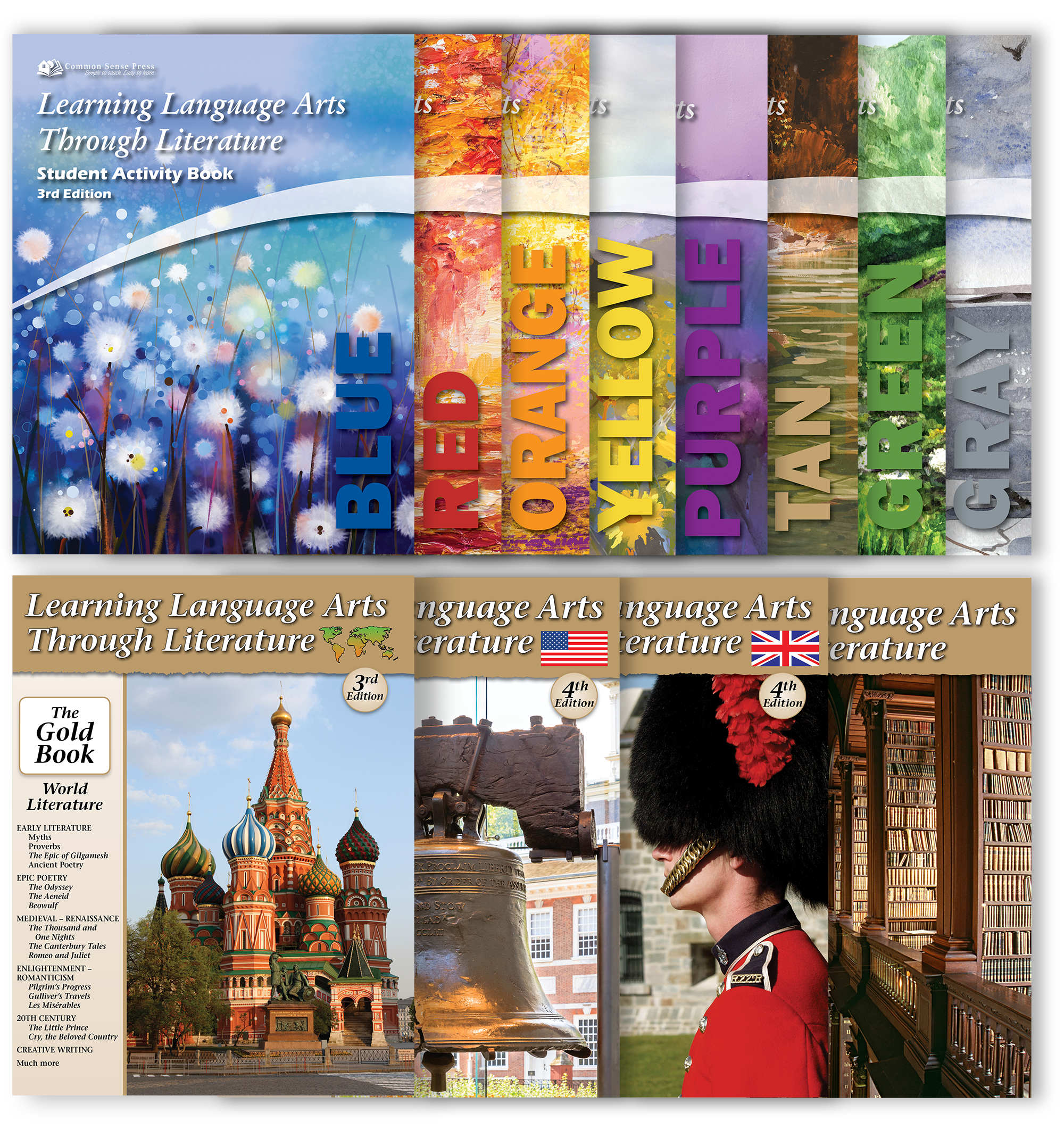
Complete Language Arts program for 1st through 12th grade.
Open-and-go, minimal prep and scripted lessons
My daughter can also work through many of these lessons independently, which is a gift both for her growing confidence and for me as someone who’s painstakingly sat through every single lesson with her so far.
If you've been looking for something that bridges the Charlotte Mason heart with the Classical rigor, that covers formal language arts without losing the warmth and literature-centeredness you love, LLATL is an absolutely wonderful resource.
📝 A Note for CC Families or those who’ve Considered Classical Conversations
If you've ever been drawn to Classical Conversations, whether you've done it in seasons or you've looked into it but the community wasn't the right fit, I want you to know that these LLATL guides cover a lot of the same ground.
If you’re already a CC family, they’re the perfect opportunity to review what you’ve covered through the year.
We've jumped in and out of CC communities over the years, and I can see now how much these guides would have served us in the years we were not attending a CC community. They provide that same consistency, similar formal scaffolding, and the same commitment to classical ideals.
But at home, on your own terms, on your own pace.
I'm genuinely a little sad I waited so long. The marketplace can feel so overwhelming, and sometimes a good thing gets lost in the noise.
But I can say confidently: we're not putting these down. We plan to continue using LLATL guides with both our children, including the Gold high school level guides with our oldest this summer or this fall, as we keep building that foundation year by year.
😎 Summer, Simply
If I could leave you with one thing, it's this: building confidence in your children doesn't require a dramatic summer school overhaul.
It requires a little consistency, beauty, and returning, gently and joyfully, to what they already know and love.
Keep reading the good books.
And if you've been looking for a language arts guide that honors both your Charlotte Mason or Classical homeschool heart and your children's growing need for structure and independence, I'd really encourage you to take a look at what Common Sense Press has put together.
We'll be right there with you, flipping through our Green Guide together, diagramming sentences through the hot stormy months here in Florida, and chatting about some of the sweetest book characters we already love.
This post is sponsored by Common Sense Press. All opinions are my own.