I was doing everything "right." My curriculum was carefully chosen. My lesson plans were organized. We had our books and and our scheduled study time. And yet, there was this constant, gnawing worry in the back of my mind: was this what I actually wanted their childhood to look like?
I'd look at other homeschoolers' Instagram feeds and see kids completing entire units while mine were asking to go outside again. I'd check the recommended pages in our curriculum guides and feel that familiar guilt—we weren't hitting the benchmarks the way we "should." The pressure was real, and it was exhausting.
Then it hit me…
I can't pinpoint exactly when it happened, but I remember standing in my kitchen one afternoon, looking at the stack of books on the table and then at my kids through the window, running, playing, climbing, observing wildlife...
I’d take them on weekly hikes and they JUMPED at the chance to head out on the trails.
And I thought: what in the WORLD am I doing?
My kids weren't sitting in traditional school. They weren't being forced to stay at desks. So why would I consider recreating that same pressure at home?
That's when I made the decision to lean into the outdoors and stop worrying.
God would handle the rest.
I stopped treating outdoor time like a reward for finishing lessons.
I made it the priority.
I stopped counting the hours spent outside as "lost" study time and started seeing it as the actual education.
It felt risky at first. There's something about letting go of the visible, checkable boxes that our culture says equals learning. No workbook pages completed, no standardized benchmarks met—just my kids exploring, discovering, asking questions, moving their bodies, building skills they couldn't get from a textbook.
I didn’t put down the books I was reading aloud for our lessons – I simply brought them with us or read them after a long day of being outdoors.
And then I realized – they weren't falling behind. They were learning differently, sure, but they were learning. And more importantly, they were becoming the kind of people we society needs our children to be…
When my oldest was ready to move into more formal academics, the foundation was there. The curiosity was there. The ability to focus and observe and wonder—that was all there.
Then my youngest moved into more formal lessons and the same thing happened.
And it hadn't come from a lesson plan. It had come from hours of freedom, outdoor exploration, and the space to just be kids.
The younger years matter, but not in the way I thought they did.
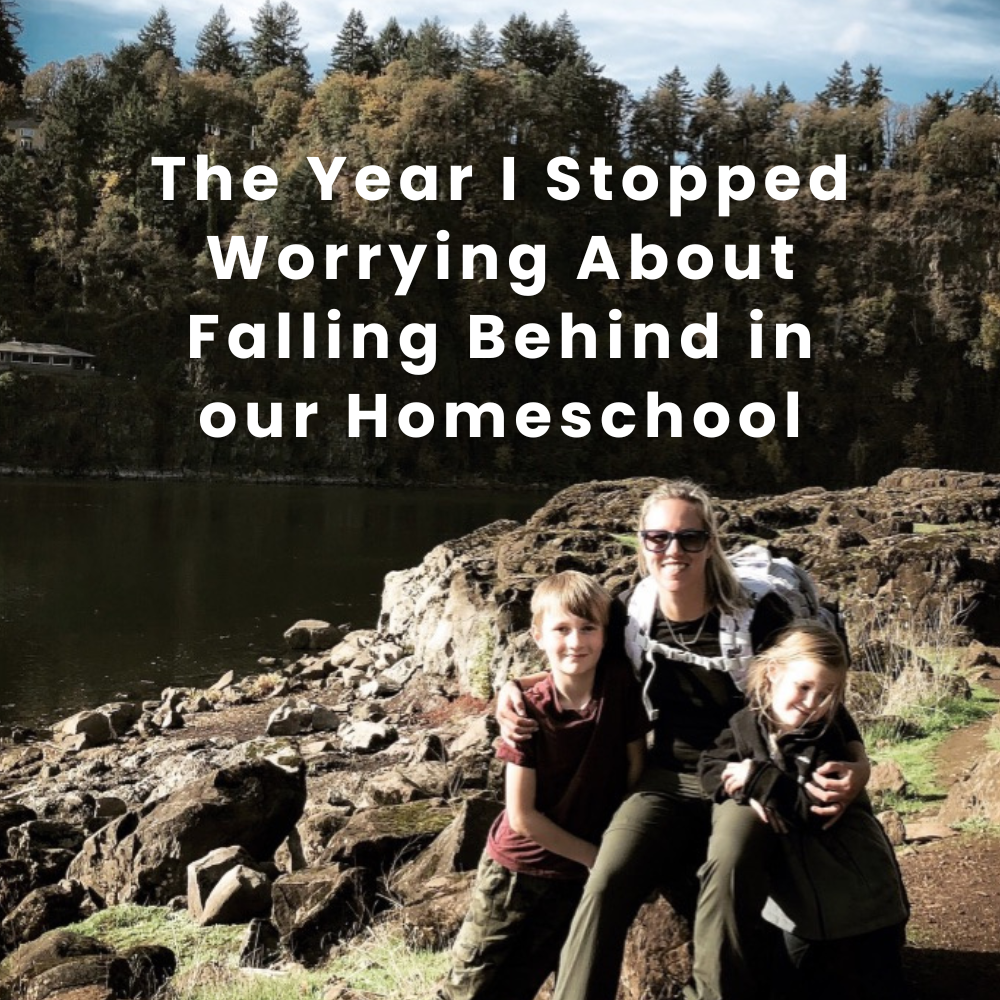
They're not about racing through material. They're about building a relationship with learning itself. With the natural world. With their own capacity to discover and think and move through the world with confidence.
I stopped worrying about falling behind the year I realized that "behind" was a meaningless measure for what we were actually doing.
Now, when homeschool moms tell me they feel guilty about not doing formal lessons, or worried their kids are missing something, I tell them what I wish someone had told me: those hours outside matter more than you think. The climbing, the exploring, the noticing, the wondering—that's not time away from education.
That is the education, especially when they're young.
If you're feeling that pressure too, if you're questioning whether you should be doing more structured academics, here's my encouragement: trust your instincts. Those are usually right. And if you need permission and a framework to actually do what you know matters, the 1000 Hours Outside Mega Bundle exists for exactly that reason. Over 450 outdoor learning activities and 85 complete units designed to help you build a homeschool that prioritizes time outside—without guilt, without worry, and without missing a thing.
Your kids won't fall behind. They'll just get to be kids for a little longer. And that pays off in ways you won't see until years later. 💚